Just 2 Words Plus
Just 2 FunWord
4.6916.00 Reviews
- Version
- 2.70
- Installs
- 10.00K
- Age Rating
- Everyone
Screenshots
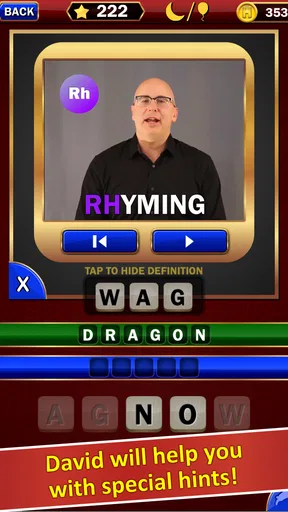
Our Review of Just 2 Words Plus
 Analysis by Appyee
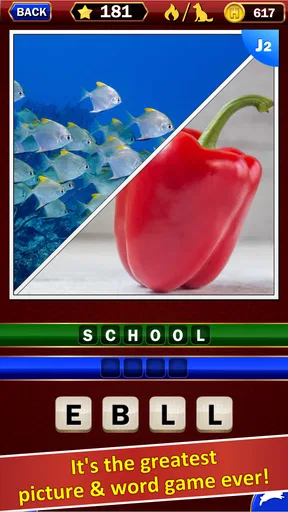
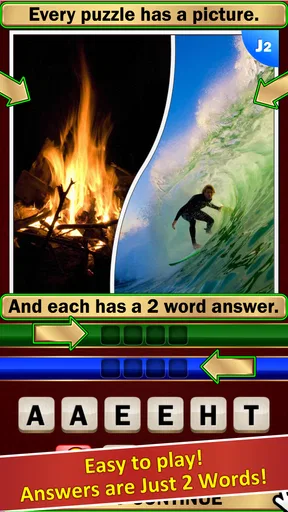
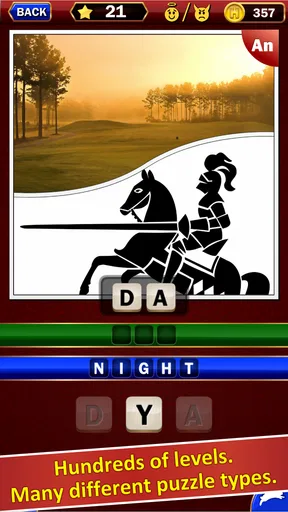
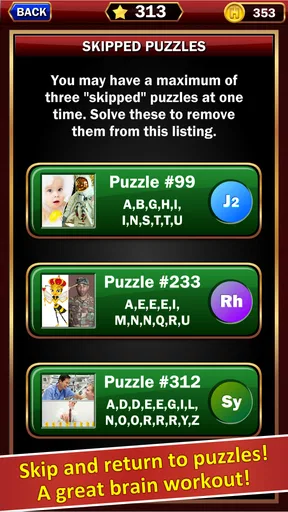
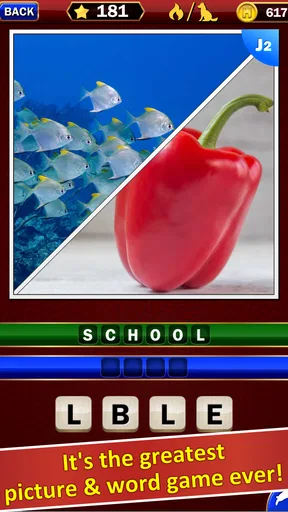
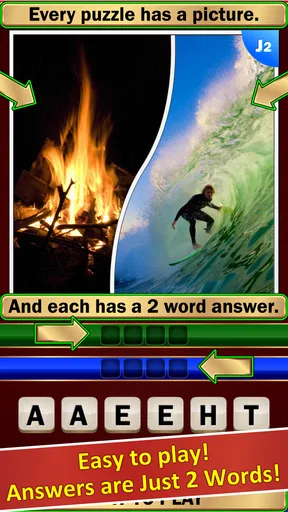
I like word games that respect a short break, and Just 2 Words Plus is built around that idea. It is a free word puzzle game from Just 2 Fun where every answer is made from two words. That simple rule makes the game easy to understand before the first round, but the clues still ask you to make connections rather than merely recognize familiar vocabulary.
My first impression was that this is best treated as a compact thinking exercise, not as a large adventure or a competitive social game. You open it when you want something mentally active without committing to a long session. The store describes it as brain-stimulating fun, and that is a fair way to frame it, provided you enjoy solving word associations and do not need elaborate graphics or a story to keep you interested.
The game is available at no purchase cost, with optional in-app purchases ranging from $0.99 to $19.99 per item. It is rated for Everyone, and the current version is 2.70. The app has an average rating of 4.6 from around 2.4 thousand ratings, while its install count has passed 10 thousand. Those figures suggest that it has found a clear audience among people who want a focused word challenge rather than a complicated mobile game.
What to expect when you begin
The central format is deliberately narrow: solve a clue using exactly two words. That limitation is the main source of the fun. A clue may bring several possible phrases to mind, but the answer has to fit the intended relationship and the two-word structure. I found that the game encourages a useful pause before typing the first idea that appears. The strongest answer is not always the most obvious word connected to the clue; it is the phrase that makes the whole puzzle click.
That makes the experience different from a standard crossword. A crossword usually gives you crossing letters, a fixed grid, and a gradual narrowing process. It is also different from a conventional word-search game, where the challenge is spotting words in a visual arrangement. Here, the work happens in your head first. You interpret the clue, test possible pairings, and decide whether the two words sound like a natural answer together.
I would also place it apart from anagram games. An anagram puzzle gives you a defined collection of letters and asks you to rearrange them. Just 2 Words Plus gives you less physical information, so general knowledge, phrasing, and flexible association matter more. That can feel refreshing if you are tired of letter racks, but it can also feel less predictable when you prefer a puzzle with visible evidence.
The short-answer rule is especially useful for first-time players because it creates a clear target. You are not wondering whether the answer should be a sentence, a phrase, or a single term. The answer has two words. Even when a clue seems broad, that constraint gives you a starting point. I recommend reading the clue slowly, saying a few possible combinations in your head, and looking for the phrase that sounds complete rather than forcing two related words together.
Installing it and getting oriented
The game supports devices running Android 6.0 or later. After installing it, I would begin with a quiet few minutes rather than opening it while doing something else. The puzzles are small, but the mental shift from reading a clue to forming a phrase is easier when you are not splitting your attention between the game and a conversation, commute, or work task.
There is no complicated learning curve to overcome. The important setup decision is really about how you want to use the game. If you are looking for a quick daily habit, keep it available for short pauses such as waiting for an appointment or taking a coffee break. If you prefer deeper concentration, set aside a longer uninterrupted session and treat difficult clues as a sequence of small reasoning problems.
Because the game is free to start, it is easy to test without making a commitment. I would still pay attention to the purchase prompts as you progress. Optional items cost between $0.99 and $19.99 each, so anyone trying to keep mobile spending tightly controlled should decide in advance whether they will use purchases. The free entry point is convenient, but convenience can make it easy to spend impulsively when a clue is resisting you.
The Everyone rating makes the game suitable for a broad audience, including families who want a calm word activity. That does not mean every puzzle will be equally comfortable for every player. Vocabulary, cultural familiarity, and experience with common expressions can all affect how quickly someone solves a clue. For younger players, I would treat it as a shared activity at first, because discussing possible answers can turn a frustrating moment into a useful language exercise.
How I approach the first successful answer
For a new player, the first meaningful success is not simply entering any answer. It is recognizing the kind of connection the game wants. I start by identifying the clue’s likely category or tone. Is it pointing toward an object, an action, a familiar expression, a place, or a description? Once I have a rough direction, I list a few words that could pair naturally with it.
My most reliable technique is to test both word orders. A phrase may make sense with the clue word first, but the intended answer may use the related term second. I also check whether the two words form something people would actually say. A pair can be logically connected and still feel unnatural. When I find a combination that sounds like a recognized phrase, I give it more weight than a pair that is merely associated in my imagination.
Another useful habit is to avoid locking onto the first interpretation. If the clue seems to describe food, for example, I do not assume the answer must be a dish. It might refer to a place, a habit, a person, or a familiar expression connected with food. The two-word limit rewards this kind of mental flexibility. When I get stuck, I deliberately change the category I am considering instead of repeating the same guesses.
That is also where the game becomes more satisfying than a simple vocabulary quiz. You are not only recalling definitions. You are judging how words behave together in ordinary language. I often feel the answer arrive as a phrase rather than as two separate words, which is a good sign that I have understood the clue’s intended relationship.
Everyday situations where it fits
One realistic use is a short break between tasks. If I have ten minutes before a meeting, a two-word puzzle gives me something more engaging than scrolling through unrelated posts, while still being easy to put down. I can attempt one clue, think about it while making a drink, and return with a fresh perspective. That delayed-solving approach is surprisingly useful because the answer sometimes becomes obvious after I stop staring at the screen.
It also works well as a shared activity. Two people can read a clue and suggest different pairings without needing a board, cards, or a separate account. I like that the format creates conversation naturally: one person may focus on literal meanings while the other thinks of idioms or familiar phrases. The game becomes less about who answers first and more about comparing how each person makes connections.
For language learners, the game can be useful as a supplement rather than a complete study tool. It encourages attention to collocations, which are words that commonly appear together. However, I would not use a difficult puzzle as a test of language ability. If a phrase depends on cultural familiarity, a learner may understand both words and still miss the intended combination. Discussing the answer afterward is more valuable than treating a miss as a failure.
It is less suitable when you need a completely relaxing game with no mental effort. Even though each answer is short, the clues can demand concentration, and repeated uncertainty may become tiring. I would choose a casual matching game instead if my goal were only to unwind visually. This one is better when I want a small challenge that keeps my attention active.
Handling confusion without losing the fun
When a clue seems to point in several directions, I try to treat that uncertainty as part of the puzzle rather than proof that I have missed something obvious. I look for the familiar two-word phrase that best fits, then step away briefly if every option still feels forced. That approach keeps the game welcoming for a first session and makes it easier to notice what kind of clue-solving suits me.
Why an answer can feel almost right
The most common frustration is finding two words that seem connected but do not feel like the intended phrase. That is not necessarily a sign that you misunderstood everything. Word association is broad, and a clue can lead you toward several plausible ideas. When this happens, I ask whether my proposed answer is a recognized expression or merely a description I invented to fit the clue.
I also check its level of specificity. A clue may suggest a broad subject, while the answer expects a more familiar pairing within that subject. Conversely, I sometimes overthink a simple clue and search for an obscure connection when an everyday phrase would be more likely. The best adjustment is to move between broad and ordinary interpretations instead of staying at one extreme.
Another source of confusion is wording. Two words can be individually correct but placed in the wrong order. I make a point of trying the reverse order before abandoning an idea. This takes only a moment and often separates a natural phrase from an awkward one. It is a small tactic, but it prevents unnecessary frustration.
If I am still stuck, I stop guessing randomly. Random entries make the puzzle feel like a lottery and do not improve my understanding of the clue. Instead, I write down the strongest two or three concepts suggested by the wording and ask what common phrase could connect them. That turns a vague block into a manageable search.
Where the game may test your patience
The same open-ended design that makes the game interesting can make it feel less transparent than a crossword with crossing letters. You may know the general topic without having enough information to prove one answer. Players who want a clearly measurable path from clue to solution may prefer games that reveal letters, provide grids, or offer more structured hints.
There is also a natural limit to replay variety in a format built around short answers. The appeal depends heavily on the quality and range of the clues you encounter. When the wording leads to a satisfying phrase, the game feels clever. When it leads to an answer that seems dependent on a particular association, the experience can feel arbitrary. I consider that a trade-off of the format rather than a flaw unique to this title.
The optional purchases are another point to consider. A free game with paid items can be a good arrangement if you are happy to play within the free experience, but it is less appealing if you expect every aid or convenience to be included. I recommend treating purchases as optional support for a difficult moment, not as part of the basic cost you must pay to understand the game.
Performance expectations should also stay realistic. This is a focused word game, so its appeal is not based on elaborate action, visual spectacle, or a large simulation. If you are choosing between this and a game designed around animation, exploration, or multiplayer competition, you are comparing different kinds of entertainment. Its strength is the clue-solving loop, and outside that loop there is little reason to install it.
Who should try it, and who should skip it
I would recommend it to people who enjoy wordplay, common phrases, and puzzles that can be solved through association rather than calculation. It is a particularly good fit for someone who wants a game that can be played in short bursts but still feels mentally worthwhile. Families and friends may also enjoy solving clues together, especially when different interpretations produce a conversation.
I would be more cautious about recommending it to players who dislike ambiguity. If you need every puzzle to provide letters, a visible board, or a single obvious route to the answer, the two-word format may feel under-clued. It may also disappoint anyone looking for a story, character progression, real-time competition, or a large collection of game modes. Those are not the reasons to choose this title.
People who are sensitive to in-app spending should decide their boundaries before playing. Since the game is free to install but includes paid items, the sensible approach is to enjoy the core challenge first and only consider a purchase if it genuinely improves your experience. If the possibility of optional spending is distracting, a paid word game with one upfront price may be a better fit.
My practical routine for getting more from it
I get better results when I separate solving from checking. First, I spend a focused moment interpreting the clue. Then I generate several possible two-word phrases without immediately submitting every thought. Finally, I compare them for natural wording, relevance, and order. This three-step routine reduces careless guesses and makes successful answers feel earned.
I also use wrong turns as vocabulary notes. When a phrase seems close but fails, I ask what made it attractive. Did the clue suggest the wrong category? Did I use a word that was related but not commonly paired? Did I ignore the order of the words? This quick review helps me recognize the game’s style instead of treating each puzzle as an unrelated obstacle.
For a group session, I suggest having each person explain the connection behind a proposed answer before anyone submits it. That keeps the activity collaborative and reveals different ways of reading the same clue. It is especially effective with children or language learners because the discussion gives context that a simple correct-or-incorrect result would not provide.
If a puzzle has become irritating, I leave it temporarily rather than spending money or making endless guesses. A short break can reset the way I read the clue. This is one of the best ways to preserve the game’s casual appeal: the goal is to enjoy the mental connection, not to prove that I can force an answer immediately.
My final view after using the game
Just 2 Words Plus is strongest when you want a small, focused word challenge with a clear rule and no complicated onboarding. Its two-word answer format gives each clue a distinct identity, and the best moments come when an ordinary phrase suddenly resolves the puzzle. I appreciate that it can fit into a spare few minutes while still asking for real attention.
It is not the right choice for every kind of player. The clues can feel less structured than crossword entries, the open-ended associations may occasionally frustrate you, and optional purchases mean that free access is not the same as an entirely purchase-free experience. Those limitations matter if you prefer firm visual guidance, a single upfront price, or a game built around progression and spectacle.
For a first-time user, my advice is simple: start without rushing, read each clue for its likely category, test familiar phrases in both word orders, and avoid random guessing. Give yourself permission to pause when a solution does not arrive. The game becomes more enjoyable once you stop treating every clue as a memory test and start treating it as a search for the most natural two-word connection.
With its Everyone rating, support for Android 6.0 and later, free starting point, and compact word-puzzle design, it is easy to recommend as a low-pressure addition to a casual gaming collection. I would choose it over a standard anagram game when I want language and association to matter more than letter manipulation. I would choose a crossword or a more structured puzzle when I want visible progress and stronger confirmation. For the right mood, though, this game delivers a pleasantly direct kind of brain exercise.
Verdict
Strengths of Just 2 Words Plus
- Simple rules make it easy to start playing immediately.
- Short rounds work well for quick breaks or casual sessions.
- Word challenges help exercise vocabulary and creative thinking.
- Solo play lets you enjoy the game without waiting for opponents.
- Clean presentation keeps the focus on solving each puzzle.
Limitations of Just 2 Words Plus
- Some puzzles may feel subjective because several answers can seem valid.
- Difficulty can vary noticeably between consecutive rounds.
- Frequent players may find the core gameplay repetitive over time.
- Hints or extra content may be limited without optional purchases.
- Players wanting competitive multiplayer may find the experience too basic.
Other Releases by Just 2 Fun
View All
Giant Jumble Crosswords
Word4.8

Just 2 Words
Word4.6
Similar Picks in This Category
View All
Word Search - Word Puzzle Game
Bluetile4.8

Word Search Quest - Puzzles
Blackout Lab4.8

CodyCross: Crossword Puzzles
Fanatee, Inc.4.7

Words of Wonders: Crossword
Fugo Games4.9

Wordscapes: Word puzzle game
PeopleFun4.7

Word Search Explorer
PlaySimple Games4.9
Frequently Asked Questions
What is Just 2 Words Plus?
Just 2 Words Plus is a word puzzle game built around solving clues with only two words. Each puzzle challenges you to identify the correct pair from the available letters or prompts, making the game easy to understand but increasingly demanding as the levels progress. It is designed for casual play, vocabulary practice, and short sessions when you want a relaxing mental challenge.
How do you play Just 2 Words Plus?
Gameplay is based on finding two related words that match the clue or puzzle arrangement shown on screen. You select letters and arrange them into the required answers, then submit your solution when you think both words are correct. Early puzzles usually introduce the mechanics gently, while later challenges require broader vocabulary, careful observation, and more trial and error.
Is Just 2 Words Plus free to download and play?
Just 2 Words Plus can generally be downloaded for free, allowing players to try the core puzzle experience without an initial purchase. However, free versions of word games may include advertising, optional hints, or in-app purchases. Before downloading, check the current store listing for the exact pricing model, available purchases, and whether any features require payment.
Does Just 2 Words Plus work offline?
Many of the puzzles in Just 2 Words Plus may be playable without a continuous internet connection once the application and its content are installed. Offline availability can depend on the version, advertisements, updates, and connected services used by the app. If you plan to play while traveling, open the game online first and test a few levels before relying on it offline.
Who will enjoy Just 2 Words Plus?
Just 2 Words Plus is a good choice for players who enjoy vocabulary games, anagram-style challenges, and simple puzzles that become progressively more difficult. It suits adults and older children who can comfortably read the clues and understand word relationships. Players looking for fast action or elaborate graphics may find it too quiet, but fans of thoughtful, bite-sized brain training should appreciate its straightforward format.
Play our best games!


